Make fresh pasta: proper instructions
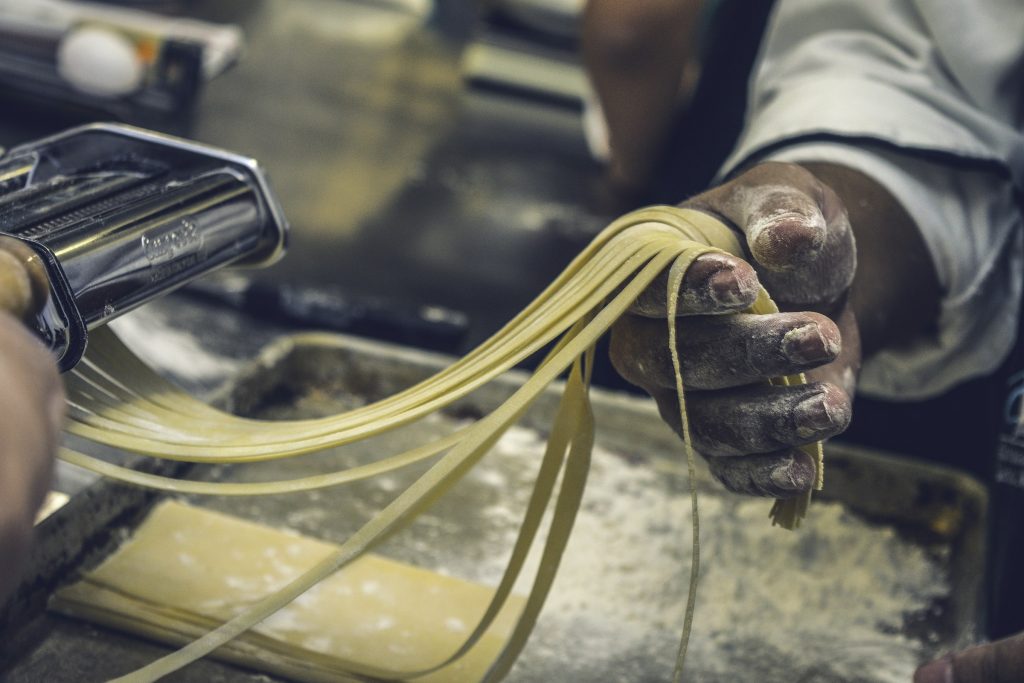
What you need
For two generous main-course portions, use 200 g Italian 00 flour or plain flour, 2 large eggs, and a pinch of fine salt. Have a fork, bench scraper or blunt knife, cling film or a covered bowl, rolling pin or pasta machine, sharp knife, and a clean tea towel ready. Semolina flour is optional for dusting and gives cut pasta a slightly drier surface; ordinary flour works if used sparingly. A large pan, plenty of water, and salt are needed for cooking. Use eggs with intact shells and keep raw dough away from ready-to-eat food.
Choose the shape before you roll
The same dough makes tagliatelle, pappardelle, lasagne sheets, ravioli and filled pasta. Long ribbons are the best first project because their thickness is forgiving and they do not need sealing. Fresh pasta cooks far more quickly than dried pasta, so prepare the sauce before boiling the water. Do not add oil to the pasta water: it can prevent sauce from clinging to the cooked pasta.
Method
1. Make the dough
Put the flour on a clean worktop and make a wide well in the middle, or use a bowl if you prefer less mess. Break the eggs into the well, add the salt, and beat the eggs with a fork. Gradually pull flour from the inner wall into the egg until a thick paste forms. Use the scraper to bring the remaining flour over the paste, then press it together with your hands. If it will not come together after a minute or two, add water a few drops at a time. If it is genuinely wet and sticks to everything, dust in a little flour. Egg size and flour absorbency vary, so texture matters more than an exact addition.
2. Knead until elastic
Knead the dough for 8–10 minutes. Push it away with the heel of your hand, fold it back and turn it. At first it may look rough and feel firm; this is normal. Keep working until the surface becomes smooth and the dough springs back when pressed. It should feel firm but pliable, not sticky. Form a ball, wrap it or cover it tightly, and rest for at least 30 minutes at cool room temperature. This rest allows the flour to hydrate and the gluten to relax, making rolling easier. If resting longer than an hour in a warm kitchen, refrigerate it, then let it sit for 15 minutes before rolling.
3. Roll thin and evenly
Cut the dough into two pieces and keep the unused piece covered. With a rolling pin, flatten one piece into a rectangle, turning it frequently and dusting only when it starts to stick. Roll from the centre outwards until the sheet is thin enough to see the shadow of your hand through it, around 1 mm for ribbons. With a pasta machine, start at the widest setting. Pass the dough through, fold it into thirds, turn it 90 degrees and pass it through again two or three times to make a smooth rectangle. Then reduce the setting one notch at a time, passing the sheet through once at each setting. If it tears, return to the previous setting, fold once and roll again. Avoid feeding a wet, sticky sheet into the machine.
4. Cut and dry briefly
Lay the sheet on a lightly floured worktop or tea towel for 5–10 minutes, until it is no longer tacky but still flexible. For tagliatelle, loosely fold it in wide layers with a little flour between them and cut strips about 6–8 mm wide; immediately lift and shake them into loose nests. A machine cutter is fine, but do not force a thick or damp sheet through it. Keep the nests separated. They need only a short drying time while the water comes to the boil, not hours of drying for storage.
5. Cook and finish in the sauce
Bring a large pan of water to a rolling boil and salt it generously; it should taste pleasantly seasoned, not aggressively salty. Add the pasta and stir gently at once to separate the strands. Fresh tagliatelle normally needs 1½–3 minutes, depending on thickness. Start tasting after 90 seconds. It is ready when tender with a slight bite at the centre. Reserve a mug of cooking water before draining. Move the pasta straight into the warm sauce and toss for 30–60 seconds, adding small splashes of starchy water until the sauce coats the strands.
How to tell it has worked
Uncooked dough should be smooth, supple and free of dry cracks. A rolled sheet should be an even thickness with no gummy patches. Cooked pasta should hold its shape, separate easily and have no raw, floury centre. Properly finished pasta looks glossy because sauce and starchy water have emulsified, rather than sitting in a puddle underneath. If your first batch is uneven, cook it in groups by thickness so fine strips do not overcook while thick ones soften.
Common mistakes
Adding too much flour during rolling makes pasta tough and leaves a dusty coating in the sauce. Counter this by using a brush or your hands to remove excess. Skipping the rest makes the dough shrink back and fight the rolling pin. Cutting sheets while they are sticky makes ribbons fuse together; leave them for a few more minutes, then separate gently. Overcooking is easy: fresh pasta is done in minutes, not the 8–12 minutes familiar from dried pasta. Do not rinse cooked pasta, because rinsing removes the starch that helps sauce adhere.
Safety and storage
Wash hands after handling raw egg and clean the worktop, bowl and utensils before preparing other food. Take care around boiling water and steam. Cook fresh egg pasta promptly, or refrigerate it well covered and use within 24 hours. For longer storage, freeze the separated nests on a tray until firm, then transfer to a sealed container; cook from frozen in boiling water, allowing a little extra time. Do not leave egg pasta at room temperature for prolonged storage.